Presenting at #ACEC2012

Cross Posted at The Global Classroom Project

On Wednesday October 1, 2012, I had the wonderful opportunity to present with Nigel Mitchell (@1nbm) on the topic: “Working in the Global Classroom” at theAustralian Computers in Education Conference


Despite some initial technical hurdles, including the fact that Skype was blocked at the school, the presentation was a great success.

We managed to Skype with Julie Lindsay, the co-founder of Flat Classroom Projects; and shared our global collaboration stories with a large local audience, and a small group of teachers in Taiwan, India, and the United States via UStream,

I hope you will take some time to explore our slides, and watch our UStream recording.

You can access, and contribute to our presentation notes here.

Print Friendly

The Next Step: Presenting @ ACEC2012

Cross Posted at The Global Classroom Project

In several hours time, on October 3, at 10.15AM local time, I will be presenting (with Nigel Mitchell) on ‘Working in the Global Classroom‘ at the Australian Computers in Education Conference in Perth, Western Australia.

This is late evening of October 2 for teachers in the Americas, morning of October 3 for teachers in Asia. Please click here to find out when this is in your time-zone.

Featuring a skype link-up with Julie Lindsay, from Flat Classroom Projects, the broad goals of the session are to: 

  • Present our rationale for integrating global perspectives across the curriculum
  • Showcase our stories and reflections as connected “global educators”
  • Interact with global educators in real time to discuss the possibilities, challenges, and learning opportunities afforded by global interactions.

You can read the full outline here.

How can you get involved?

A key goal of this presentation is to involve our national and international audience through streaming the session LIVE via UStream & inviting global educators around the world to help us write our presentation notes.

Tweet

Please feel free to comment using the #globalclassroom hashtag, and chat with our session participants. This will be our official backchannel to the live / UStream presentation.

Watch

If all goes to plan, you can follow us LIVE on UStream here: http://www.ustream.tv/channel/the-mgraffin-channel#events

Please click here to check when this is in your time-zone.

Share

We’d also sincerely appreciate it if you’d take some time to share your advice, resources, links, and suggestions for teachers new to connecting and collaborating globally.

We are crowd-sourcing our presentation notes in Google Docs, seeking to showcase the power of international collaboration in action.

https://docs.google.com/document/d/1STb-xPK29WEGLBgegzxHZIOraQjlMrm2yetajXTgpec/edit#heading=h.727hoxhx6f7c

Please tweet this widely – we’d like to make this a truly global resource.

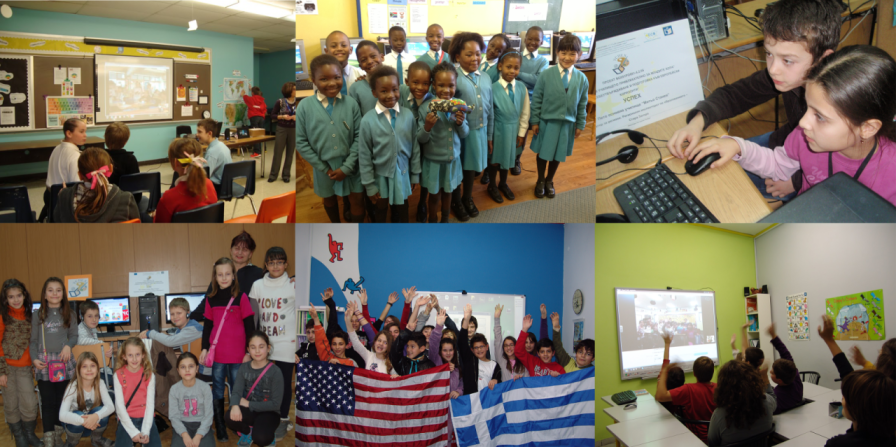
Anyone recognise these little characters?

Print Friendly

Classroom 2.0 Book Project: #globalclassroom Stories


This post originally appeared on The Global Classroom Project blog

We are proud to announce that our chapter submission to The Classroom 2.0 Book project is now live. With over 75 submissions from leading educators worldwide, this amazing project was organised by Steve HargadonRichard Byrne, and Chris Dawson of the Classroom 2.0 network.


Now, we need YOUR help!

The Global Classroom Project – Classroom 2.0 Book

We’d truly love to have the #globalclassroom story published in a print book for the very first time. (One day, we might write our own. Until then, this is the next best thing!)

If you could take a few minutes to read our submission, and share it with your networks, we’d be extremely grateful. The more readers we get, the more likely we are to be included.

Thank you to Deb Frazier, Theresa Allen, Effie Kyrikakis, and Kyle Dunbar whose contributions made this chapter submission possible. We hope you enjoy reading our #globalclassroom stories.


Michael Graffin and Deb Frazier – The Global Classroom Project

Print Friendly

Rock the World! (#flatclass Book Club Reflections – Part 9)

Several months after it began, my #flatclass reflections series has finally come to an end. I really enjoyed attending the official Book Club, and I hope my blogged reflections will help inspire and guide other teachers interested in exploring this amazing field.

Perhaps too, they will help provide some feedback to the book’s amazing authors, who inspired my first steps into the wonderful world of global collaboration.


Chapter 11: Challenge Based Professional Learning

If there is one thing the Flat Classroom community particularly excels, it is their model of challenge-based PD for teachers.

For now at least, my attendance at a Flat Classroom Conference remains a distant dream; however, this chapter provides an impressive overview of #flatclass PD. Frankly, most of the theory and PD framework in this chapter went over my head, but if this area interests you, I’m sure you’ll find it a fascinating read.

Chapter 12: Rock the World

This chapter was short and sweet, and can be simply summarized in a few lines

  • Make connections which count
  • Learn YOUR way
  • Be prepared to help and share
  • Set some goals – take that first step!
  • Share your story, and "Rock the World"

This chapter is a fitting conclusion to Flattening Classrooms, Engaging Minds; and it reflects my own learning journey over the past few years.

Every journey starts with a single step … and its time to "Rock the World". Care to join me?

Print Friendly

Designing and Managing a Global Collaborative Project (#flatclass Book Club Reflections–Part 8)

For anyone new to planning and organizing a global project, this chapter is for you. Chapter 10 is an invaluable step-by-step guide to creating a global project; exploring many lessons we learnt the hard way,and providing some useful ideas which will be incorporated into Global Classroom 2012-13.

I was particularly interested in the social media / marketing strategy outlined in this chapter, as the public #globalclassroom project spaces were explicitly built on the Flat Classroom spaces. We just added a few of our own ideas – including our enormously successful Skype IM group, and the monthly #globalclassroom Twitter chats.

762940-721201285236am

As I commented in my (little publicized) Edublogs Fine Focus webinar last week, our project is not the first "global classroom" project in existence, and certainly won’t be the last.

Each project builds on and utilizes the people and technology available at the time. The ideas, dreams, and creative potential already exist – it is just a matter of making the connections and fostering the global conversations.

The Global Classroom Project came to be through our connections, which were made possible by the social media technologies available to us at the time. Our model is about providing the communication and collaboration spaces for interested teachers, and I have no doubt that it will continue to grow, evolve, and change over time.

Print Friendly

Celebrating Global Collaboration (#flatclass Book Club Reflections: Part 7)

Over the past year, an extraordinary bunch of international educators transformed a vision of global collaboration community, dreamt up right here in Western Australia, into a real world reality. The Global Classroom Project has been an extraordinary experience, and we thought this was something worth celebrating.

Chapter 9: Celebration, in Flattening Classrooms, Engaging Minds, filled in the missing piece of the #globalclassroom puzzle; bringing home the need for an official closure and celebration of our 2011-12 project.

We needed to provide a space and opportunity for our teachers and students to celebrate and share their experiences with the world. So on July 1, 2012, we held our Looking Forwards, Looking Back webinars, inviting our teachers to contribute to an international showcase of our projects, learning experiences, and achievements through Global Classroom 2011-12.

Due to terrible technical problems, the morning (Americas) webinar turned into an impromptu Google+ Hangout; however, the evening Australia / Europe webinar was an incredible success, with speakers from India, Taiwan, New Zealand, Australia, Taiwan, Romania, and the USA.

The closing webinars also provided an opportunity to share the first pictures of the #globalclassroom memento scrapbooks, which are traveling to classrooms around the world. These scrapbooks provide our students with the opportunity to share their voices, cultures, and learning with the wider world, and will continue on their journeys for at least another year to come.

Book Club Reflections …

I found Chapter 9 of the #flatclass book a very relevant, informative chapter; one which had a significant impact on the #globalclassroom community. While the way we acknowledge and celebrate learning is somewhat different to the #flatclass model, that’s the way I like it.

We’re building on the work of those that come before us, and are exploring new ways to learn, connect, and collaborate globally. As they say, life is always more interesting when you’re a pioneer …

Print Friendly

An Australian Teacher’s #GlobalEd Update

It is hard to believe that I am only a few months away from celebrating the second year of my first professional blog. As time has gone by, the topics have changed, and my readership has fluctuated, but I’m still here. I personally think that’s quite an achievement, considering all that has gone on behind the scenes …

In light of what has been a very busy to start to the year, I thought I’d share my first (occasional) Global Education Update

 
cc licensed ( BY ) flickr photo shared by woodleywonderworks


Global Classroom 2011-12 is coming to an end

Nine months after the official launch of the Global Classroom Project (2011-12), we are planning its conclusion. There are feedback surveys to prepare, a few VoiceThreads to create, a wiki showcase to work on, and the final webinar(s) to organise …

Yet, as I look back, I’m happy. This project, and the people I work with, have helped me through the ups and downs of the past year, and led to some amazing new opportunities and connections. It has been a wonderful experience, and I’m certainly looking forward to taking a few months break!

We are currently working on the final project, building a commerative wiki (http://globalclassroommementos.wikispaces.com), and sending several #globalclassroom scrapbooks around the world. It is time to celebrate our teachers’ & students’ achievements in Global Classroom 2011-12.


The May #globalclassroom Twitter chats start this weekend (in a few hours)

This month marks the first time our newly-formed chats team have organised the monthly #globalclassroom chats.

I’d like to thank Jennifer Fenton (@jennysfen), for organising this month’s chat, and to Andrew Thompson (@1AndrewT63), who bravely put his hand up to help out, and is on the list for next month :)

This month’s topic is: Getting a global project started … Where do you begin, and how do you make it meaningful and sustainable?, contributed by Laurie Renton (@RentonL).

I hope you will take a moment to explore (and bookmark) our new Global Classroom Twitter Chats wiki, which you will find at http://theglobalclassroomchats.wikispaces.com

The chats start today, Saturday, May 12, and run until Monday / Tuesday next week. Please see the wiki to find out when they run in your timezone. I hope to see you there!


Exploring new opportunities with iEARN Australia 

And finally, in what was one of the most satisfying moments of the year to date, I’ve joined the iEARN Australia management team, where I’ll help run the Australian branch of the world’s largest and longest established global collaboration community.

Drawing on my experience running Global Classroom, I am looking forward to helping grow the iEARN Australia network, raising awareness about the benefits of global education and collaboration within the wider Australian educational community. I’m determined to make the most of this very special opportunity, so stay tuned! :)

Print Friendly

The 3 R’s of Global Collaboration (#flatclass Book Club – Part 5)

I’m a couple of weeks behind on my #flatclass reflections, but here are my thoughts on Chapter 6: Contribution and Collaboration …

Key ideas in this chapter included: “Receive, Read, and Respond“, the essential habits which underpin effective global projects; and an exploration of strategies for supporting communication, collaboration, and leadership within global learning communities.

While the focus of the bookclub was on supporting student communication and collaboration, I want to apply these ideas to the teachers in the #globalclassroom community, sharing some of the challenges we’ve faced, and the lessons I’ve learnt over the past year.

Building Community

The Global Classroom Project was designed as a meeting space & global collaboration platform, not as a single collaborative project (e.g. Digiteen). At last count we’ve hosted over 15 major projects, and welcomed hundreds of teachers into our online spaces. Yet, while we do our best to welcome new teachers into our community, we continue to confront the major challenge of connecting with our ‘lurkers’.

Our single greatest challenge is the first step: Saying ‘hello”.

While we provide the online spaces for teachers to connect, we have no control over their participation & engagement in our community & project spaces. I’ve learnt that different online spaces suit different people … and realised that less than 1/3 of our new teacher sign-ups become actively involved in our work.

This is not to say that these teachers aren’t there, but work pressures, over-zealous email spam filters, language barriers, and variations in school years are significant barriers to their active participation in global collaboration …

For me, our greatest success stories have emerged from a simple IM “hello” on Skype or Twitter. We need to establish the personal connection, translating the teacher’s name on the spreadsheet into a real human being. BUT, we need our teachers to make that first step – to receive, read, and respond to our communications; as some are finally doing – nearly 6 months after joining!

Learning for the future

As this past year has flown past, we have witnessed Global Classroom become an established feature of the global collaboration community. We fulfill a need; providing the space and connections for innovative teachers to explore new ways to flatten their classroom walls, and mentor new teachers in the art of global collaboration.

Global Classroom 2012-13 will be different, because our teachers are different, and because I’m different. We’re learning from our mistakes, and through the book club, I’m becoming more comfortable learning and working with the #flatclass community. We have separate identities and roles, but we are learning so much by learning together.

I may be a dreamer, but I believe we can make Global Classroom a world-leading educational community in the years to come.

Our work is pushing the boundaries of what is possible; and I believe that our implementation of some of the #flatclass “handshake” strategies & communication advice (Chapters 4 and 6) will enable us to improve the connections we forge with our people, who are the true leaders of educational change.

Print Friendly

Teacherpreneurs – Connect, Create, and Collaborate (#flatclass Book Club – Part 2)

Chapter 3, Connection, is the first installment of “The Seven Steps to Flatten Your Classroom“. It was focussed on ways teachers and students can create their own Personal learning Networks, using push and pull technologies to make the enriching global connections which underpin their learning, sharing, and collaboration.

Despite suffering from severe information overload, there were a few quotes and ideas in this chapter which really stood out, helping me to understand a little more about my own (technology enabled) learning habit, and educational mindset.

 Flickr CC Licensed: ‘Working Together Teamwork Puzzle Concept’


“When you know how to connect effectively, you have the power to learn”

Personally, this idea reflects my own experiences over the past year. On March 22, I celebrated the first anniversary of my first-ever global project, the very first time I was able to connect my students with the world.

I have been on Twitter for maybe 14 months, yet my global connections have transformed the way I teach, and the way I learn. My connections have led to wonderful global friendships, amazing educational partnerships, and quite literally impacted on students’ learning around the world.

I couldn’t do the work I do without my wonderful PLN, who support, inspire, and educate me on a daily basis. This is humbling, but it is a fundamental truth.

The Teacherpreneur – My “Ah-ha” Moment

A teacherpreneur is a person who seeks to enrich their classroom learning environment by “forging partnerships with other classrooms with common curricular goals and expectations. They accept the risks and responsibilities for the endeavour, and are accountable for the outcome.” (p. 44).

“Good teacherpreneurs aren’t renegades, they are connectors” (p. 45)

As I frantically scribbled “YES!!” in my notes, I realised that this concept defines what I have become over the past few months. While I haven’t yet had the opportunity to make meaningful, long-term connections within my own school and classroom learning environment, I’m helping to connect teachers around the world

‘Teacherpreneurship” is the idea which underpins the #globalclassroom community – we have created a place where teachers can work together to forge global partnerships, explore ways to extend their curriculum through global connections, and share responsibility for the ultimate success of their projects.

And this is an idea worth sharing.


Print Friendly

“It is time to be the voice of change” – (#flatclass Book Club – Part 1)


Global collaboration is a journey which tends to take you in unexpected directions!


A year ago, I would never have dreamt that I’d be reading and reviewing Flattening Classrooms, Engaging Minds, nor would I have believed I would have the chance to connect and learn with the authors, Julie Lindsay and Vicki Davis.

Rather than writing an ‘official book review’, I’ve decided to record my musings on the #flatclass book as I try to engage in the online book club over the coming weeks.

So, here are my musings on Chapters 1 and 2.


“21st century skills harness not only the power of technology, but the power of people” (p. 3)

Reading the introductory chapters, I was taken aback by the parallels between my recent (unpublished) writings about #globalclassroom, and the #flatclass authors’ thoughts on effective global collaboration.

Having written almost exactly the same words a few days previously, this statement reinforced one of the key lessons I’ve learned leading Global Classroom – that while our work was made possible by technology, it is our people who have made it a reality.

Our work has been successful because our teachers, all over the world, are actively supporting each-other’s professional learning, and sharing responsibility for the management (and success) of our #globalclassroom projects.


“The aim of global collaboration is to improve learning, flatten classroom walls, and develop authentic audiences” (p. 4)

As I wrote some time ago, we are creating “the online spaces for teachers and students to connect, share, learn, and collaborate on a global stage”. And we’ve succeeded in building community; providing the space and support network for teachers to connect and collaborate, where they can experience the powerful impact of global collaboration and learning first-hand.

Built by teachers, for teachers, The Global Classroom Project is enabling our students to share their learning with the world; and helping our teachers explore innovative, transformational teaching and learning practices. We’ve opened up a window to the world, and we can’t go back.


“Connect one person at a time, build trust, and move forward together.” (p. 20)

I was struck by Suzie Nestico’s comment in the first #flatclass book club session relating the success of global collaboration to “building trust in the online environment”, going beyond the intitial connections to engaging in meaningful collaborations.

We are starting to make this happen, particularly in our Skype group, where teachers, who came to us with little confidence and collaborative experience, are building online connections and friendships through IM conversations and skype calls.

With a little support and encouragement, these teachers are starting out on their learning journeys, beginning to engage in their very first, more meaningful global collaborations. Yes, these are small steps, but these teachers’ stories are inspiring their colleagues – locally, and around the world.


“It is time to be the voice of change.” (p.20)

“Learning globally includes making a difference to the world.” (p.7)

I never expected to lead the creation of a global learning community. I was ‘just’ a second year relief (substitute) teacher, who has never had a class of his own. Yet, my social networking presence enabled me to make that initial connection with Deb Frazier in Ohio, USA; and later, it provided the connections which underpinned the collaborative development of the Global Classroom community.

As Deb and I look forward to celebrating the first anniversary of our ‘Twitter connection’ in April 2012, we can’t believe how our #globalclassroom spaces have become vibrant, community-minded forums where our teachers and students are connecting, making friends, and beginning to collaborate globally.

We are making a difference in the world, and helping teachers become the “voices of change”.


So, I conclude with a simple “thank you”

Julie and Vicki, it is hard to believe that an exploration of the #flatclassroom website and project wikis would kindle a teacher’s dream, and ultimately lead to the collaborative creation of a new global community.

But it did.

My work has changed the way I see and interact with the world. I now have friends across 6 continents, and find myself in the extraordinary position of leading a global education community in my third year of teaching.

I have a lot to learn, yet I suspect I am becoming “a voice of change”. I’m helping to make a difference in the world; and as our grassroots community continues to grow and evolve, I’m not alone.

Print Friendly